


Armored vehicle types are fundamental to the strategic military capabilities of armed forces around the world, providing essential protection, mobility, and firepower in a variety of combat and peacekeeping scenarios. This blog explores the diverse categories of armored vehicles, including their design, features, and operational applications. From the transport of troops in conflict zones to the execution of complex peacekeeping missions, these vehicles are pivotal in shaping modern warfare dynamics.
Military vehicles are no longer focused solely on armor and weapons. Today, armored platforms operate as connected intelligence units, integrating sensors, AI analytics, and real-time communications to improve survivability and mission effectiveness.
Recent conflicts — including the war in Ukraine — have demonstrated that armored vehicles must operate in increasingly complex environments involving drones, loitering munitions, electronic warfare, and precision artillery. As a result, modern vehicle design now prioritizes situational awareness, digital connectivity, and integration with unmanned systems alongside traditional protection and firepower.
From the transport of troops in conflict zones to the execution of complex peacekeeping missions, these vehicles are pivotal in shaping modern warfare dynamics.
In 2026, modern armored vehicles are increasingly integrated with digital battlefield systems. Advances in sensor fusion, artificial intelligence, and real-time communications now allow armored platforms to operate as connected nodes within broader combat networks rather than standalone vehicles. This shift enables faster decision-making, improved survivability, and enhanced coordination across ground forces.
Types of Armored Vehicles
Armored vehicles are crucial in modern warfare, offering protection, mobility, and firepower. The choice of vehicle depends on the mission requirements, terrain, threat level, and strategic objectives of the military forces. They are categorized mainly into:
Armored Personnel Carriers (APCs):
These are primarily used for the safe transportation of infantry to and from combat zones. They are equipped with armor protection and often have armaments such as machine guns or grenade launchers. Popular models include the Stryker (USA), the Namer (Israel), the Boxer (Germany/Netherlands), and the BTR-82A (Russia).
Modern APCs increasingly integrate remote weapon stations, battlefield management systems, and drone integration capabilities. These systems allow crews to monitor threats, coordinate with other units, and engage targets without exposing personnel.
Infantry Fighting Vehicles (IFVs):
IFVs are similar to APCs but are equipped with heavier armament and are designed to engage enemy infantry and armored targets. They provide direct fire support to infantry and can engage in combat independently. Popular models include the Bradley Fighting Vehicle (USA), the BMP-3 (Russia), Warrior (UK), and Puma (Germany.)
Next-generation IFVs incorporate active protection systems (APS), AI-assisted targeting, and improved sensor packages to detect anti-tank threats and unmanned aerial vehicles (UAVs). These enhancements significantly improve battlefield survivability, especially in environments full of anti-armor weapons.
Main Battle Tanks (MBTs):
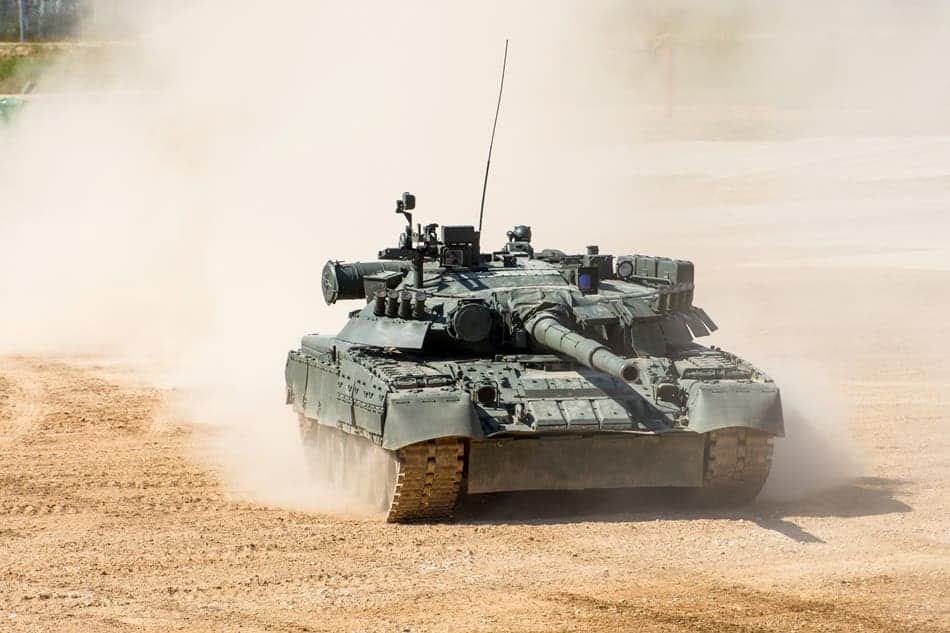
MBTs are the primary armored fighting vehicles of modern armies. They are heavily armored and armed with a large-caliber tank gun and secondary machine guns. MBTs are designed to dominate the battlefield through firepower, mobility, and protection. Examples include the M1A2 Abrams (USA), the Merkava Mk4 (Israel), the Leopard 2A7 (Germany), and the T-14 Armata (Russia).
Today’s MBTs increasingly incorporate advanced defensive technologies such as active protection systems, digital fire control systems, and networked command interfaces. These upgrades help tanks survive anti-tank missiles, drones, and top-attack munitions.
Light Armored Vehicles:
These vehicles are used for reconnaissance, security, and rapid deployment of forces. They are lighter and faster than MBTs and IFVs but have less armor protection. Popular models include the LAV-25 (USA) Fennek (Germany/Netherlands), and JLTV-based reconnaissance platforms.
These vehicles often serve as forward reconnaissance platforms equipped with advanced sensor systems, allowing commanders to collect real-time battlefield intelligence before committing heavier forces.
Mine-Resistant Ambush Protected (MRAP) Vehicles:
MRAPs are designed to withstand improvised explosive device (IED) attacks and ambushes. They are used for patrolling and counter-insurgency operations. Examples include the Cougar (USA), MaxxPro (USA), and the Casspir (South Africa).
Although originally developed for counter-insurgency operations, MRAP platforms continue to evolve with improved mobility and electronic countermeasure systems to address emerging asymmetric threats.
Armored Amphibious Vehicles:
These vehicles are capable of operating on land and water, making them suitable for amphibious assaults and river crossings. Examples include the AAVP-7A1 (USA) the BTR-80A (Russia), and the newer ACV (Amphibious Combat Vehicle) used by the U.S. Marine Corps.
Amphibious vehicles allow forces to project power across shorelines, rivers, and wetlands while remaining protected during the time they transition between sea and land operations.
Self-Propelled Artillery:
These are armored vehicles equipped with large-caliber artillery, used for indirect fire support. They can be highly mobile and provide significant firepower. Models include the M109 Paladin (USA), K9 Thunder (South Korea), and the 2S19 Msta (Russia).
Modern artillery systems increasingly incorporate digital targeting systems and automated fire-control technology, enabling faster target acquisition and improved accuracy in coordinated fire missions.
Air Defense Vehicles:
These are armored vehicles equipped with anti-aircraft guns or missile systems used to protect ground forces from aerial threats. Examples include the Flakpanzer Gepard (Germany), 2K22 Tunguska (Russia), and modern mobile air defense platforms designed to counter UAV swarms.
With the popularity of drones in modern warfare, mobile air defense vehicles are becoming critical components of armored formations.
Military Vehicle Applications in Modern Warfare
Armored vehicles play a vital role in modern military operations, with different types being suited for specific scenarios:
Combat Scenarios:
In conventional warfare, the role of Main Battle Tanks (MBTs) and Infantry Fighting Vehicles (IFVs) is critical. MBTs, with their heavy armor and powerful armament, are used to break through enemy lines and engage in direct combat with enemy armored units. IFVs support infantry troops, providing them with mobility and fire support on the battlefield. They enable infantry to keep pace with tanks and offer protection against small arms fire and shrapnel. Armored Personnel Carriers (APCs) play a crucial role in transporting troops to and from the front lines while offering protection from enemy fire and explosive devices.
The integration of drones and digital battlefield systems now allows armored units to detect threats earlier, coordinate attacks more effectively, and reduce exposure to ambushes or anti-tank weapons.
Peacekeeping Missions:
In peacekeeping operations, where the focus is on stability and support rather than direct combat, Light Armored Vehicles (LAVs) and Mine-Resistant Ambush Protected (MRAP) vehicles are often preferred. LAVs offer a balance between speed, agility, and protection, making them suitable for patrolling, reconnaissance, and quick response to emerging situations. MRAPs are particularly valuable in regions prone to asymmetric warfare tactics, such as IED attacks. Their design minimizes casualties in case of explosions and ambushes, making them ideal for ensuring the safety of peacekeeping forces in volatile environments.
Counter-Insurgency Operations:
In counter-insurgency operations, where armed forces combat irregular forces and insurgent groups, MRAPs and APCs are extensively used. Their robust protection against IEDs, landmines, and small arms fire is crucial in these environments. These vehicles are essential for patrolling, convoy protection, and troop transportation in areas with high threats of ambush and explosive devices. They provide the necessary mobility and protection to conduct operations in urban and rural settings where insurgents may blend in with the civilian population.
Terrain-Specific Operations:
Different terrains require specialized vehicles. In coastal environments, Amphibious Armored Vehicles are indispensable. They provide the capability to conduct operations both on land and in water, which is essential for amphibious assaults, river crossings, and operations in wetlands or flood-prone areas. These vehicles can transition from water to land operations seamlessly, allowing forces to project power in coastal regions and navigate water obstacles that would otherwise impede movement.
Technology Transforming Armored Vehicle
By 2026, armored vehicles are no longer defined solely by armor thickness or firepower. Their effectiveness is increasingly driven by onboard computing, network connectivity, and access to real-time intelligence shared across land, air, and command systems.
Modern military vehicles now rely heavily on:
Advanced edge computing platforms allow these systems to process sensor data directly on the vehicle, enabling faster threat detection and decision-making without relying on remote command centers. These capabilities significantly improve battlefield military situational awareness and mission coordination.
Armored Vehicles in the Modern Military
The versatility and adaptability of armored vehicles are key to their effectiveness in diverse warfare scenarios. Each type of vehicle is designed with specific roles in mind, ensuring that armed forces have the right tools to face various challenges in modern warfare. This adaptability is critical in meeting the evolving demands of different combat environments and operational requirements.
Future armored platforms are expected to incorporate greater levels of autonomy, AI-assisted decision support, and integration with unmanned aerial and ground systems. Rather than operating independently, armored vehicles will increasingly function as nodes within a larger combat network, sharing intelligence with drones, command systems, and nearby units in real time. With ongoing advancements in technology and military tactics, these vehicles continue to adapt and evolve, solidifying their position as indispensable assets on the battlefield. To delve deeper into the future trajectories of these armored vehicles, we invite you to explore our in-depth analysis in the accompanying blog on the future of armored vehicles and AI-powered battlefield systems.
Military Vehicle FAQs
What are the main types of military vehicles?
The main types include armored personnel carriers, infantry fighting vehicles, main battle tanks, light armored vehicles, MRAPs, amphibious vehicles, and self-propelled artillery systems.
What are the different types of military armored vehicles?
Types of military armored vehicles include APCs, IFVs, MBTs, MRAPs, reconnaissance vehicles, anti-aircraft vehicles, and armored artillery platforms.
How do military vehicle types differ?
They differ based on armor level, mobility, weapon systems, mission role, terrain capability, and threat environment.
What is the difference between an APC and an IFV?
APCs focus on troop transport and protection, while IFVs carry heavier weapons and actively engage enemy targets alongside infantry units.
Why are armored vehicles important in modern warfare?
Armored vehicles provide protected mobility, direct firepower, and survivability, allowing forces to operate effectively in high-threat environments.
What military vehicles are used in peacekeeping missions?
Light armored vehicles and MRAPs are commonly used due to their mobility, protection against explosives, and suitability for urban patrols.
How are armored vehicles evolving in 2026?
They are evolving through AI integration, sensor fusion, edge computing, and enhanced connectivity with battlefield intelligence networks.
What role does technology play in armored vehicles today?
Technology enables real-time surveillance, threat detection, navigation, communications, and coordination with other military assets.
Are armored vehicles used in non-combat operations?
Yes. They are widely used for humanitarian support, border security, disaster response, and peacekeeping operations.
How are armored vehicles selected for missions?
Selection depends on terrain, threat level, mobility requirements, mission duration, and intelligence integration needs.